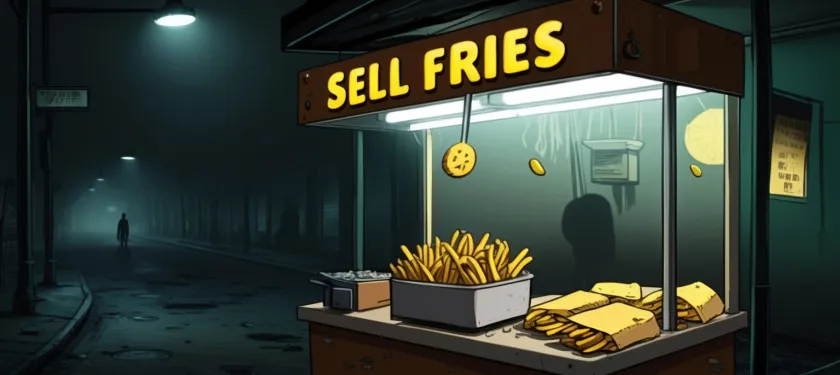
Sell Fries: Where Idle Progress Meets Unsettling Suspense
19-11-2026
Sell Fries looks like a laid-back incremental game at first glance, but that calm surface hides a tense rhythm that keeps every session alert and unpredictable. Instead of simply clicking and collecting, you are constantly balancing business growth with sharp observation, because the world around your fry stand can shift in unsettling ways without warning. The appeal comes from that contrast: one moment you are upgrading production and watching your numbers climb, and the next you are scanning customers for any unusual issues before they turn into a problem. With current codes, players can speed up that progress through temporary gem boosts and extra spins, making the whole experience feel more rewarding. What what makes the game truly stand apart is more than just the rewards, but the way it blends management, suspense, and fast decisions into a format that looks simple until you are already deep inside it.
What Makes the Fry Stand Feel Different
Most incremental games focus on gradual progress, where the main challenge is patience and optimization. Sell Fries adds a layer of urgency that changes the mood completely. You are still building a system that earns money on its own, but the game keeps interrupting that comfort with strange behavior from customers and shifting conditions that demand immediate attention. That means your attention is divided between two goals: expanding your operation and surviving the unexpected. The outcome is a gameplay cycle that feels familiar to fans of idle progress, yet much more active and tense than expected. It is precisely this blend of routine and disruption that gives the experience its identity. Instead of mindless repetition, you get a gameplay cycle that asks you to stay aware even while your automated setup does most of the work.
Robust Growth Through Automation
The core fantasy in Sell Fries is building a fry business that eventually handles itself. At the beginning, the process may feel manual and direct, but the game motivates you to invest in systems that reduce repetitive labor. You are encouraged to automate as much as possible so that your focus shifts from basic preparation to smart management. This creates a satisfying sense of development, since every improvement makes the business more efficient and less dependent on constant input. Watching the operation scale up stands out as one of the game’s greatest strengths, especially because the upgrades feel meaningful rather than decorative. Automation is not just about convenience here; it is the foundation that lets you survive longer runs and free up attention for the more dangerous side of the experience.
The Tension Hidden in Ordinary Customers
Among the most unforgettable design decisions in Sell Fries is the way it turns customers into possible threats. The game teaches you to watch for subtle changes in behavior, because a customer who looks slightly off may signal danger. This creates a low-level anxiety that stays active even during calm moments. Unlike traditional incremental titles, where the environment is usually safe and predictable, this one requires constant judgment. You are not only managing production numbers, but also making rapid decisions about whether to keep serving or shut things down. That tension adds depth to every interaction and makes the act of selling fries feel far more dramatic than the premise suggests. It also means that even routine orders can become important moments of risk assessment.
When the Shop Has to Shut Its Doors
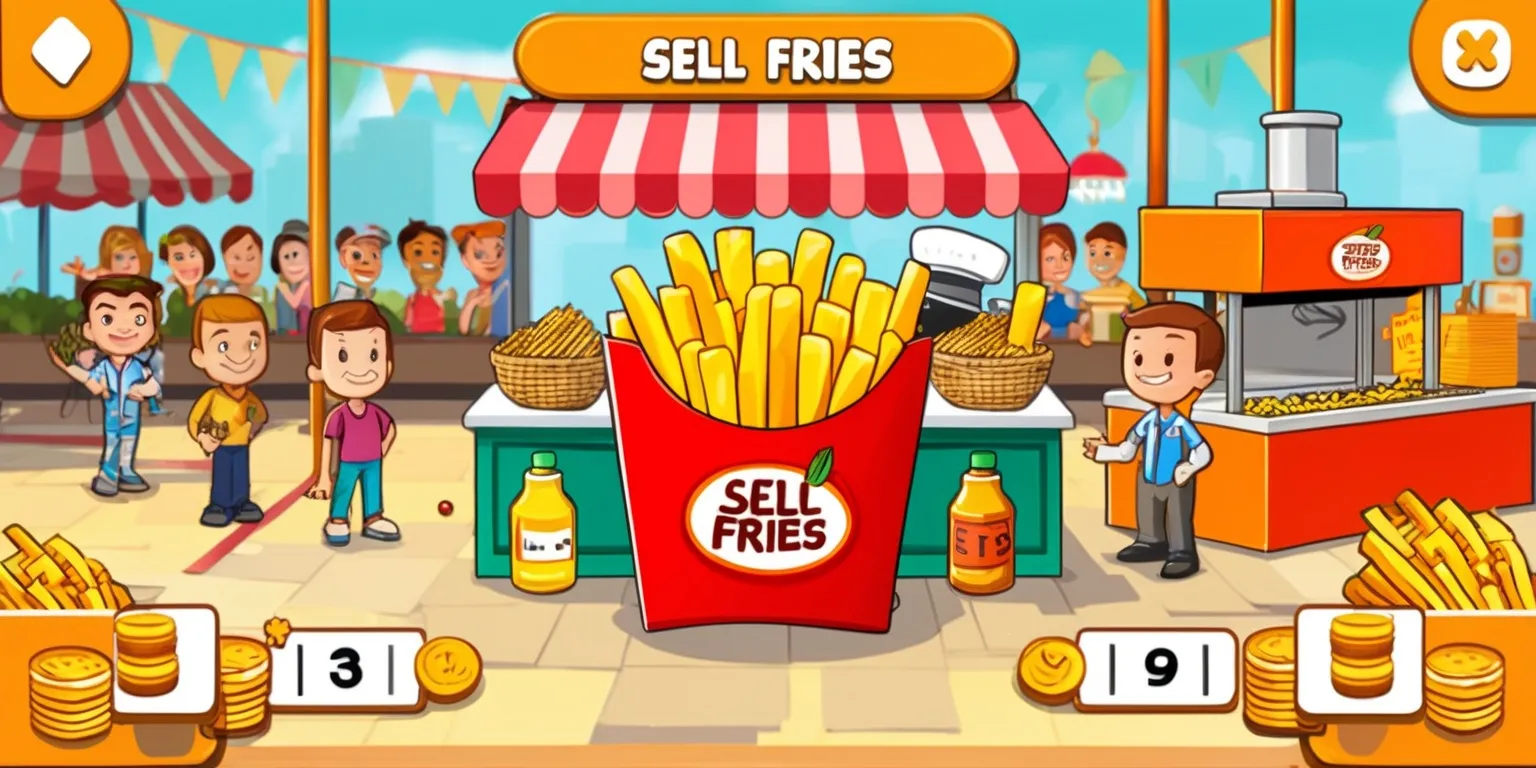
Selling fries in this game is not just about efficiency; it is about knowing when to stop. If something strange appears, your best option is often to close the shop and take cover, especially if you are outside. That mechanic makes the environment feel vulnerable and reactive, as if the business itself is only one half of the challenge. The decision to shut down is not a failure state by default, but a survival tactic that can save an entire run. Because of this, timing becomes essential. You might be tempted to focus on earnings, upgrades, or spin rewards, but the game reminds you that survival comes first. This mechanic gives Sell Fries a strong identity, since it transforms a simple food-selling fantasy into a careful exercise in defensive awareness and situational control.
Getting from the Lobby to the Run
The lobby in Sell Fries acts as your safe planning space, while the active run is where the pressure begins. Once you are in a game, you cannot casually wander back whenever you want. Returning to the lobby requires ending the current attempt, so every choice you make carries weight. This structure keeps the pacing focused and makes each session feel committed rather than loosely connected. If you decide to leave a run, the game gives you a couple of ways to do it, either by ending through hazard or by using the menu option to respawn. That design reinforces the idea that every trip into gameplay is a contained challenge. The lobby is useful, but the real action happens once you step into a run and accept the risks of staying there.
Codes as a Shortcut to Momentum
For players who want a faster start, Sell Fries codes provide a direct boost to progress. They are especially useful because the game’s economy can benefit greatly from temporary multipliers and bonus rewards. One active code grants a strong gem multiplier for a limited time, while another gives additional spins for the Lucky Chest. These rewards help players gain resources more quickly and can make early advancement feel smoother. The value of codes lies not only in the items themselves, but in how they influence the pace of play. A temporary boost gives you a window where better upgrades or extra prizes become easier to reach. In a game that already mixes tension and progression, that extra momentum can make a noticeable difference during the most important stages of a run.
Lucky Chest Rewards and Spin-Based Progress
Spin rewards in Sell Fries add an extra layer of anticipation to the overall loop. They are designed around the Lucky Chest rather than a class system, which means players use them to chase random rewards tied to progression and utility. That is an important distinction, because it changes how players think about the rewards they earn from codes. Instead of directly selecting a benefit, you are working with chance and discovery. This keeps the loop fresh and creates a small moment of excitement whenever a spin is available. If the chest gives you something useful, it can meaningfully shape your next stretch of play. Even if the result is not exactly what you hoped for, the system still supports the game’s broader philosophy of turning every small bonus into a possible advantage.
The Fast Pace Behind the Calm Visual Setup
Visually, Sell Fries carries the look of a straightforward business game, but the tone shifts once the pressure starts rising. The contrast between a practical fry-selling setup and the strange behavior of anomalies creates a memorable atmosphere. Rather than relying on flashy effects alone, the game lets tension grow through what is happening around the player. This makes the visuals feel functional and purposeful, since the most important details are the ones that warn you something is wrong. The environment serves the gameplay well by keeping the shop readable while still allowing eerie moments to stand out. That balance is part of the appeal. The presentation supports the experience without overwhelming it, and the outcome is a game that feels clean, recognizable, and just unsettling enough to keep you alert.
Why Attention Matters More Than Speed
Although the game can feel fast during moments of danger, Sell Fries is actually built around awareness more than raw reaction speed. The player’s success depends on noticing unusual signs and responding with good judgment before the situation gets worse. This means the game rewards observation, pattern recognition, and calm decision-making. In many ways, that is what makes it more appealing than a standard action-heavy experience. You are not simply rushing through tasks; you are learning to process the scene quickly and understand when the ordinary has become suspicious. That approach gives the game a smart rhythm. It is active without being chaotic, and tense without becoming exhausting for every second. Players who enjoy reading the environment and responding under pressure will likely find this structure especially satisfying.
Using Boosts to Strengthen Each Session
Temporary boosts from codes can change the shape of a play session in useful ways. A gem multiplier, for example, can improve your earning potential during a limited period, encouraging you to make the most of that window. Extra spins can also provide a welcome push if you are looking to collect more rewards without grinding as heavily. These bonuses are not permanent, which makes them feel valuable in a different way. They encourage planning, timing, and efficient use of your session. If you redeem them when you are ready to focus, they can support a more productive run and help you overcome rough early progression. What is especially clever is how these boosts fit the game’s hectic nature. They do not remove the danger; they simply make the business side of things more rewarding while you continue to manage the threats around you.
The Appeal of a Game That Changes Tone Midstream
Sell Fries works because it refuses to stay in one mood for too long. It begins like a simple incremental project where you expect routine growth, then transforms into something more nerve-wracking once the unusual elements start appearing. That shift gives the game replay value, because the player is never fully able to settle into a single mindset. You may enter planning to optimize your production, but the real skill lies in adapting when the atmosphere turns strange. This changing tone is a large part of the game’s personality. It makes the overall experience feel sharper and more memorable than a typical idle title, since the comfort of progress is always balanced against the threat of disruption. The result is a business simulation that feels active, uneasy, and rewarding all at once.
Session Management and Smart Timing
Because runs cannot simply be paused and resumed from the lobby whenever you choose, timing becomes an important part of how Sell Fries is played. You need to decide when to stay in a session, when to use resources, and when to step away. That creates a practical layer of strategy on top of the core experience. Staying too long in a risky situation may cost progress, while leaving too early can interrupt a productive rhythm. The game’s structure makes each session feel deliberate, even if the core concept is simple. This matters because the player is constantly balancing opportunity and caution. By the time you are managing boosts, watching customers, and protecting your business, the session becomes a layered exercise in planning as much as reaction.